Electoral Area No. 69 • Sujanagar & Bera Upazilas • Rajshahi Division
History Preserved.
Leadership Documented.
Future Envisioned.
“A constituency shaped by water — the fertility and violence of the Padma and the Jamuna, the life-giving beels of Sujanagar, the embankments built against annual inundation, and the erosion that claims homesteads with relentless patience.”
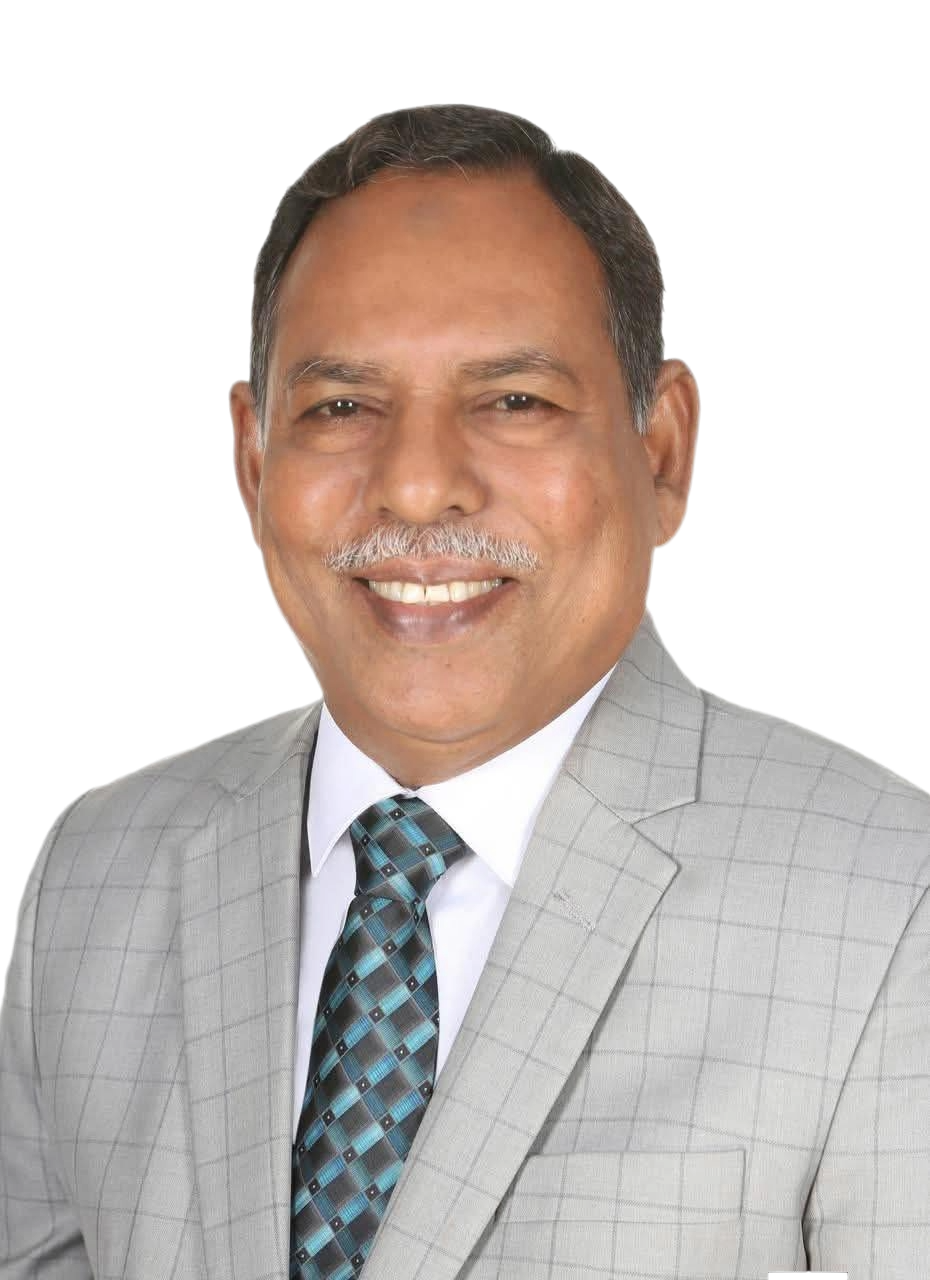
The Land & Its People
The Constituency at a Glance
Understanding the geographic, demographic, and economic fabric of Pabna-2.
Combined population of Sujanagar and Bera Upazilas.
Southern Pabna District, between 23°48'–24°06' N latitude.
Electorate spanning two upazilas of Rajshahi Division.
Created for Bangladesh’s first post-independence elections.
Sujanagar Upazila
“The Onion Capital of Bangladesh”
Covering 338.65 sq km of alluvial floodplain drained by the Padma and Atrai rivers, Sujanagar is the western and larger of the two upazilas. Population: 305,576 (2022), density ~902/sq km. Thana established 1872 under British colonial administration, upgraded to upazila in 1983.
Three significant wetlands — Gajnar Beel, Mahishkholer Beel and Zider Beel — anchor the local fishing economy and shape agricultural cycles. Sujanagar is nationally recognised as Bangladesh’s onion capital, with diversified farming of boro rice, mustard, wheat, jute and vegetables making it one of the most diversified agricultural economies in Pabna District.
Bera Upazila
“The 2nd Adamjee” — Rivers, Jute & Vulnerability
Covering 243.43 sq km on the eastern edge of Pabna District where the Padma and Jamuna rivers converge. Population: 301,494 (2022). Administrative origins are older: Mathura Thana was established in 1828, relocated to Bera in 1927 after the original headquarters were consumed by river erosion.
Nationally known for the Nagarbari ferry terminal — the historically vital Padma crossing connecting northern Bangladesh with the capital — and the Mujib Bandh, the 157.5 km flood-protection embankment inaugurated by Bangabandhu on 26 February 1972. Known locally as the “2nd Adamjee” for its historically significant jute market.
Geographical & Demographic Parameters
| Parameter | Detail |
|---|---|
| Northern Boundary | Santhia Upazila (Pabna District) |
| Southern Boundary | Rajbari Sadar & Pangsha Upazilas (across the Padma river) |
| Eastern Boundary | Jamuna/Padma river channel; Chauhali, Daulatpur & Shivalaya Upazilas |
| Western Boundary | Pangsha Upazila & Pabna Sadar Upazila |
| Major Rivers | Padma, Jamuna, Atrai, Ichamati, Hurasagar, Boral |
| Notable Wetlands | Gajnar Beel, Mahishkholer Beel, Zider Beel (Sujanagar); Dhalai Beel, Ichar Beel, Nandiar Beel (Bera) |
A Digital Museum
Story of the Land
From Mughal-era zamindars to the communal upheavals of partition — tracing the deep roots of Pabna-2.
Mughal Origins & the Naming of Sujanagar
The territory that today constitutes Pabna-2 has been inhabited and cultivated since at least the Mughal period. Sujanagar’s original name was Govindganj, reflecting Hindu zamindari influence. At the close of Emperor Shahjahan’s reign, a local noble renamed the settlement Sujanagar, translating broadly as “the town of good (or virtuous) people.”
The Pabna District itself was established as a distinct administrative unit in 1832, carved from parts of the ancient territory of Pundravardhana, one of the great kingdoms of the early first millennium. The district’s name, according to the historian Radharaman Saha, derives from “Paboni”, a branch of the Ganges, while the archaeologist Alexander Cunningham linked it to the ancient kingdom of Pundra.
The Zamindari System & Heritage Architecture
The colonial period under the Permanent Settlement of 1793 consolidated a zamindari system in which a small number of landed families held revenue collection rights over vast territories. Sujanagar was home to several such houses:
- Zamindar Bari of Tantibanda — Built by the family of Vijay Govinda Chowdhury, one of the most powerful estates. His tenure was marked by elaborate public celebrations including elephant processions.
- Azim Choudhury Zamindar Bari (Dulai village) — Dating to the 1700s, another surviving monument of the era.
- Hemrajpur Shiva Mandir & Durga Mandir — Attesting to the syncretic cultural life where Hindu zamindari patronage coexisted with a predominantly Muslim peasantry.
During the 1857 Sepoy Revolt, Zamindar Govinda Chowdhury of Tatibanda sided with the British colonial authorities, employing private guards to help suppress the uprising.
The Bengal Partitions & Their Local Consequences
The first Partition of Bengal in 1905 generated sharply divergent reactions in the Pabna area. The predominantly Muslim peasantry broadly welcomed the creation of Eastern Bengal and Assam province. Hindu zamindars opposed it as an attack on Bengali Hindu political power. The reversal in 1911 deepened communal tensions.
The 1947 partition creating Pakistan was the more transformative rupture. The departure of the Hindu zamindari class disrupted the local economy and left behind the crumbling havelis that survive today. The East Bengal Estates Acquisition Act of 1950 redistributed zamindari holdings but created new political networks around land control and sharecropping that would shape politics for decades.
Sacrifice & Resistance
The Liberation War of 1971
The Bera-Sujanagar region held exceptional strategic importance during the 1971 Liberation War.
The Mass Uprising — Sujanagar
During the Gono Obbhuthan, Jamadar Abul Husayn of Sujanagar was shot dead by Pakistani police at the Sujanagar High School playground on the anniversary of the Language Movement martyrs of 1952. This galvanised local sentiment and embedded Sujanagar within the narrative of Bengali resistance.
Nagarbari Ferry Ghat
Freedom fighters took positions at the Nagarbari Ferry Ghat — the primary Padma crossing point between northern Bangladesh and Dhaka. On 9 April, Pakistani forces conducted aerial bombing raids on the ferry ghat to dislodge the defenders, killing innocent civilians. The willingness to bomb a civilian transport crossing reflects how vital the Nagarbari position was.
The Battle of Paikarhati
One of the major set-piece battles of the northern sector. The engagement resulted in the deaths of 25 freedom fighters and approximately 150 Pakistani soldiers — a 1:6 kill ratio representing exceptional resistance against a well-equipped conventional force. Recorded as one of the most significant engagements in the broader Pabna theatre.
Liberation & The Cost
Direct encounters occurred at Sagarkandi, Satbaria, Bhabanipur and Nischintapur. Three mass killing sites were established in Sujanagar alone. Freedom fighters Abdul Awal, Abdul Barek and Abdus Sadek were killed. On 14 December, three more fighters were shot. The upazila was liberated on 15 December 1971. Seven mass graves are documented across the district.
The Mujib Bandh — A Living Monument
On 26 February 1972, Bangabandhu Sheikh Mujibur Rahman personally inaugurated the 157.5 km flood protection embankment by placing the first pot of soil at Bashantapur point in Bera. The largest infrastructure project of the immediate post-independence period, it remains the structural backbone of flood protection for the entire constituency. In February 2018, a 26-foot monument “Shekar Theke Shikhore” (From Root to Summit) was inaugurated at Dhobakhola Coronation High School in Bera’s Natiabari.
Administrative Evolution
Constituency Formation & the 2025 Boundary Dispute
Formation in 1973
Pabna-2 was created as Electoral Area No. 69 for Bangladesh’s first parliamentary elections in March 1973, encompassing Sujanagar Upazila and the bulk of Bera Upazila. Numbered between Pabna-1 (Area 68) to the north and Pabna-3 (Area 70).
The 2025–2026 Delimitation Controversy
In September 2025, the Election Commission redefined Pabna-2 to encompass the whole of both upazilas, including Bera Municipality and four unions historically part of Pabna-1. Two residents challenged the gazette in the High Court, which on 18 December 2025 declared it unlawful. The dispute escalated through three separate judicial interventions — High Court ruling, Appellate Division stay, and Appellate Division final order — before the election proceeded on 12 February 2026 under the expanded boundaries.
Five Decades of Democracy
Complete Electoral History (1973–2026)
Thirteen general elections and one by-election — a compressed version of Bangladesh’s democratic journey.
| Year | MP Elected | Party | Votes / % | Turnout | Context |
|---|---|---|---|---|---|
| 1973 | Syed Haider Ali | AL | — | — | AL Landslide; first election of independent Bangladesh. AL won 293 of 300 seats. |
| 1979 | M. A. Matin | BNP | — | — | BNP’s first Pabna-2 win under President Ziaur Rahman. Matin was a physician. |
| 1986 | Mokbul Hossain | JP | — | — | AL & BNP boycott; Ershad-era non-competitive election. Also won 1988. |
| 1991 | Osman Ghani Khan | BNP | — | — | Full multi-party democracy restored after Ershad’s fall. |
| Feb 1996 | A K M Selim Reza Habib | BNP | — | ~21% | AL boycott; turnout collapse. Parliament dissolved after 12 days. |
| Jun 1996 | Ahmed Tafiz Uddin | AL | 67,250 (48.0%) | 75.6% | Competitive caretaker-supervised election. Habib got ~55,000 (39.3%). |
| 1998 | A. K. Khandker | AL | — | — | By-election after death of Tafiz Uddin. Khandker: Bir Uttom, Liberation War hero. |
| 2001 | A K M Selim Reza Habib | BNP | 97,704 (52.9%) | 78.4% | Mirza Abdul Jalil (AL): 86,013 (46.5%). BNP majority: 11,691. Habib’s first full term. |
| 2008 | A. K. Khandker | AL | 116,730 (55.1%) | 90.1% | Habib: 95,000 (44.9%). AL majority: 21,730. Extraordinary turnout. |
| 2014 | Azizul Huq Arzu | AL | Unopposed | 31.9% | BNP boycott; no opposition candidate. Only 3 token contestants. |
| 2018 | Ahmed Firoz Kabir | AL | — | — | Contested amid widespread irregularity allegations nationally. |
| Jan 2024 | Ahmed Firoz Kabir | AL | — | — | Re-elected. Resigned 6 August 2024 following the July Revolution. |
| Feb 2026 | A K M Selim Reza Habib | BNP | 215,406 (73.9%) | — | Hesab Uddin (Jamaat): 77,242 (26.5%). BNP majority: 138,164 — the largest in Pabna-2 history. |
2026 Detailed Results — Pabna-2 Constituency
| Candidate | Party | Votes | % Share |
|---|---|---|---|
| A K M Selim Reza Habib | Bangladesh Nationalist Party (Sheaf of Paddy) | 215,406 | 73.9% |
| Md. Hesab Uddin | Bangladesh Jamaat-e-Islami | 77,242 | 26.5% |
| Sheikh Nasir Uddin Sheikh | Gano Forum | (minor) | — |
| Md. Mehedi Hasan Rubel | Jatiya Party | (minor) | — |
| Md. Afzal Hossain Khan | Islami Andolon Bangladesh | (minor) | — |
Pre-election analysis by The Daily Star described Pabna-2 as “BNP’s safest seat” in the district. BDNews24 noted that AL voters were “largely absent” following August 2024.
A Chapter in the Constituency’s History
A.K.M. Selim Reza Habib
The single individual who has defined the political identity of Pabna-2 across the post-1990 democratic era.
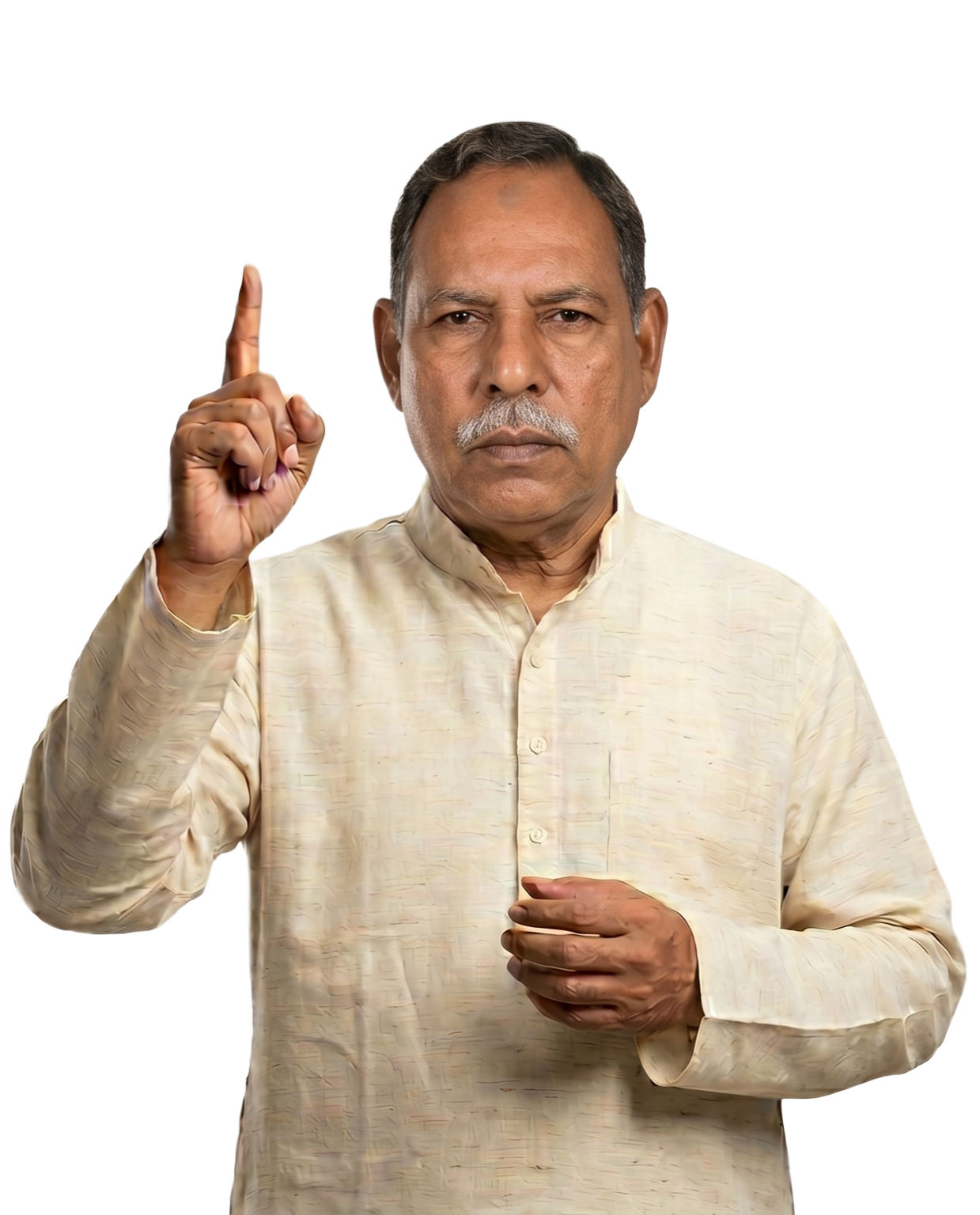
Personal Background
Born on 20 March 1959 in Pabna District. He pursued a legal education and qualified as an Advocate — consistently identified as “Advocate Selim Reza Habib” in election materials. Associated with Sujanagar Upazila, he has built his political base there over more than three decades.
His consistency of constituency — contesting only Pabna-2 across his entire career — is unusual in a political culture where successful politicians often shift to safer seats. His combination of legal profession, educational philanthropy and party organisation represents the classic model of a Bangladeshi constituency politician.
1996 (×2), 2001, 2008, 2018, 2026
Feb 1996, 2001, Feb 2026
Sustained constituency engagement since the early 1990s
Educational Philanthropy: Selim Reza Habib Degree College
Habib is the Founder and Chairman of the Governing Body of Selim Reza Habib Degree College at Sujanagar, Pabna. In rural Bangladesh, a privately established college creates immediate and lasting political capital: it provides employment for teachers and administrative staff, educational access for hundreds of local families who would otherwise need to travel to urban centres, and a named monument to the patron that persists regardless of electoral outcomes.
Complete Career Timeline
Party Position & National BNP Networks
Habib has maintained consistent BNP membership and active party engagement across his career. He is a member of both the 6th and 8th Jatiya Sangsad. His early, unambiguous nomination for 2026 reflects the party’s assessment of Pabna-2 as a stronghold requiring no internal deliberation. His ability to maintain unity and avoid a rebel contest was itself a tribute to his dominance within the local BNP structure — built over 30 years of sustained engagement.
During the years of AL dominance (2008–2024), when BNP politicians faced routine legal harassment and institutional marginalisation, Habib’s continued engagement in Pabna-2 politics kept the BNP’s presence alive. His 2026 victory was the culmination of decades of sustained presence in difficult conditions.
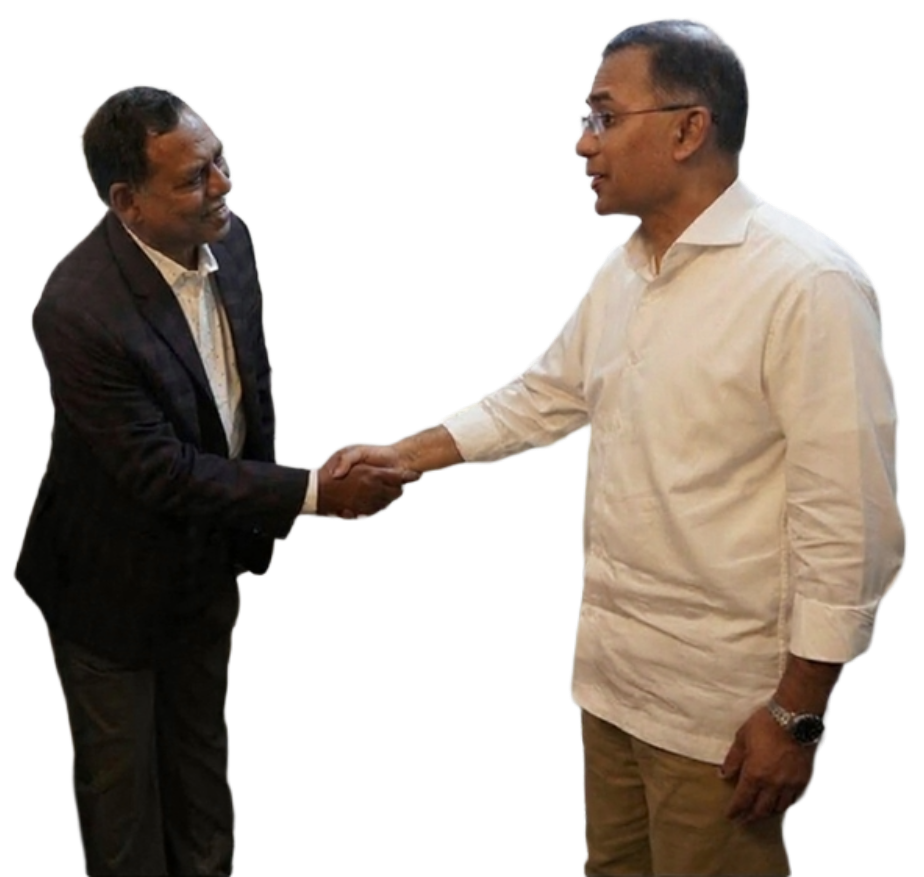
Solidarity with Acting Chairman Tarique Rahman
A testament to Habib’s standing within the national BNP hierarchy — a bond of trust built across decades of loyalty, sacrifice, and sustained grassroots service in Pabna-2.
Parliamentary Heritage
Notable Political Figures of Pabna-2
A. K. Khandker Bir Uttom
1998 (by-election), 2008–2014
Air Vice Marshal (Retd.) Abdul Karim Khandker, born 1930. Deputy Chief of Staff of Bangladesh Armed Forces during 1971 Liberation War. Awarded Bir Uttom, the second highest gallantry decoration. Former Planning Minister. Won the seat with 116,730 votes (55.1%) in 2008 on a historic 90.1% turnout.
Ahmed Tafiz Uddin
1996–1998
Won Pabna-2 in June 1996 with 67,250 votes (48.0%). Died in office June 1998, necessitating the by-election won by A. K. Khandker. His son Ahmed Firoz Kabir later inherited the AL standard-bearer role (2018, 2024), creating an unusual political dynasty.
A K M Selim Reza Habib
2001–2006, 2026–Present
Secured historic landslides for BNP in both 2001 and 2026. A renowned philanthropist, he established multiple educational institutions across Pabna-2. His visionary leadership and grassroots connection reshaped the constituency's political landscape, culminating in a record 73.9% mandate in 2026.
Ahmed Firoz Kabir
2019–2024
Born 26 July 1963. Son of Ahmed Tafiz Uddin. Won Pabna-2 in 2018 and retained it January 2024. Served until 6 August 2024 when he resigned following the July Revolution. His exit marked the end of two decades of unbroken AL hold on the seat.
Azizul Huq Arzu
2014–2018
Born 7 April 1958. Former Chairman, Bera Upazila. MA in Communication. Elected unopposed in 2014 during BNP’s national boycott. Served on parliamentary standing committee on Fisheries and Livestock Ministry. Contributed to the “Shekar Theke Shikhore” monument at Nagarbari.
Mokbul Hossain
1986–1990
Born 30 June 1943, died 28 August 2021. Dhaka University graduate and freedom fighter of 1971. Won Pabna-2 for Jatiya Party in 1986 and 1988 under Ershad. Later served as Presidium member of Jatiya Party and Chairman of Pabna District Council. Buried at Arifpur graveyard.
Recent Activities
2026 Political Dossier
Political Timeline (April – June 2026)
- Parliamentary Activity: Raised issues regarding fertilizer crisis, dealership irregularities, anti-land grabbing laws, and energy crisis impacts on agriculture. Demanded the construction of a second Jamuna Bridge.
- Gajnar Beel & Agriculture: Inaugurated water hyacinth removal, distributed seeds, fertilizers, and restarted the Talibnagar pump house to boost crop yields.
- Energy & Industry: Inaugurated Mobarakpur Deep-01 gas exploration and managed land compensation. Visited Bengal Meat to encourage local employment.
- Social Outreach: Distributed sewing machines for female employment, laid the foundation for flood shelters, and conducted drives against excessive Eid transport fares.
Development Focus Areas
Communication: Relocating Kazirhat Ferry Ghat to reduce travel time and demanding a second Jamuna bridge for North Bengal connectivity.
Agriculture: Extensive programs focusing on seed/fertilizer distribution and reviving irrigation systems like canals and pump houses.
Power Network: Regular engagement with district administration, Water Development Board, agriculture departments, and BIWTA alongside strong BNP grassroots coordination.
Political Profile Analysis
Strengths: Daily grassroots presence, strong advocacy for agricultural and regional issues in parliament, and solid standing within the BNP National Executive Committee.
Criticisms: Citizen comments reflect demands for faster project implementation, concerns over drug issues, and questions about whether agricultural incentives are reaching genuine farmers.
Summary: His 2026 activities project the image of a "development-oriented, agriculture-centric, and organizationally active leader."
Livelihoods & Land
Economy, Agriculture & Livelihoods
A constituency anchored in agriculture, shaped by water, and driven by the resilience of its people.
Agricultural Diversity
The area’s 8-crop combination places it among Bangladesh’s most agriculturally diversified constituencies:
Pabna District ranked second in brinjal production within Rajshahi Division in 2021–22, contributing 17,761.89 metric tons. Jute cultivation extends over ~38,721 hectares. District-wide vegetable output reached 568,000 metric tons from 22,171 hectares in 2022.
Gajnar Beel — Ecological & Economic Heart
A complex of three interconnected water bodies at the geographic centre of Sujanagar. Artisanal fishing households depend on it year-round. BWDB re-excavation and irrigation projects — including the Borai River intake channel — reflect its centrality to the food and livelihood system. The beel also functions as a social and cultural gathering place.
Bera — Jute, Dairy & Riverside Commerce
Historically a major jute marketing hub. Multiple milk-processing factories supply urban markets. The Nagarbari ferry terminal continues to function as a regional transport and commerce node, though its relative importance has declined since the Bangabandhu Bridge shifted some traffic.
Floods & River Erosion — The Permanent Economic Threat
In April 2025, a devastating episode of Jamuna river erosion struck Bera. The Financial Express reported erosion had “turned frightful” along Neolaipara, Notun Batiakhara and Marichapara villages. Some 300 families lost homes over two years, with ~1,000 bighas of land engulfed.
In 2020, over 20,000 families were marooned when the Padma, Jamuna and Boral rivers simultaneously flooded ~100 villages. The Padma devoured over 500 homesteads in Sujanagar’s Gupinpur, Borkhapur, Raipur, Gulchandpur and Khalilpur areas. Riverbank erosion across the Jamuna corridor has eroded approximately 4.873 km of land displacing 12,739 residents between 1990 and 2025.
Transparency & Progress
Development Infrastructure & Public Investment
A comprehensive record of the agencies and sectors shaping Pabna-2’s future.
| Sector | Agency | Key Activities |
|---|---|---|
| Rural Roads & Bridges | LGED | Brick-soling, HBB surface upgrade; culverts; market-link and school-link roads across Sujanagar and Bera. |
| Primary Education | Education Engineering Dept. | PEDP-3/4: new school buildings, headmaster rooms, toilet blocks at Krordulia GPS, Char Bhawanipur GPS, Manikhat GPS, Ulat GPS, Manikdir GPS and others. |
| Water Resources | BWDB | Gajnar Beel re-excavation, Borai River intake channel, irrigation development, fish culture improvement. |
| Flood Embankment | BWDB | Mujib Bandh (157.5 km). Inaugurated Feb 1972. Periodic breach repair and monsoon reinforcement. |
| Municipal Infrastructure | Sujanagar Pourashava | Urban drainage, road paving, street lighting, solid waste management via LGD and UGIIP. |
| Social Safety Net | LGED | Houses for landless freedom fighters and extreme poor under Asrayan/Gharey Fera programmes. |
| Health Facilities | Health Engineering Dept. | Upazila Health Complex renovation; community clinic construction in both upazilas. |
| Secondary Education | Education Dept. | Government secondary school renovation under SESIP and earlier SEQAEP programmes. |
| Padma Barrage (Proposed) | BWDB / Ministry of Water | Phase-I: ~BDT 3,449 crore (~USD 300M). Would regulate Padma flow, expand dry-season irrigation, arrest erosion across Pabna and Rajshahi. |
Political Transformation
The July 2024 Revolution & Its Impact
The political landscape of Pabna-2 was fundamentally transformed by the mass uprising of July–August 2024. What began as student-led protests against job quota reservations escalated into broad anti-government unrest culminating in Sheikh Hasina’s flight from Bangladesh on 5–6 August 2024 and the formation of an interim government under Nobel laureate Muhammad Yunus.
In Pabna District, AL leaders who had dominated local politics faced a sudden reversal. Ahmed Firoz Kabir, the sitting MP for Pabna-2, resigned his seat on 6 August 2024 — the day of the formal transition. For BNP, and specifically for Selim Reza Habib, the transition created the political opening denied for 15 years. BNP consolidated its local organisation in Sujanagar and Bera without the institutional headwinds of the 2008–2024 period. The result — Habib’s 215,406-vote landslide — was the electoral expression of this transformation.
People & Society
Demographic & Social Profile
Population & Growth
Combined population ~607,070 (2022 census), up from ~534,889 (2011). Sujanagar density: ~902/sq km. Bera density: ~1,238/sq km. Registered electorate: 300,789 (2018 roll).
Religious Composition
Both upazilas predominantly Muslim. Sujanagar (2011): 268,256 Muslims (~96.4%), 9,813 Hindus, 15 Christians. Bera: 246,463 Muslims (~95.9%), 10,320 Hindus. The Hindu minority is concentrated in village clusters historically associated with former zamindari estates.
Literacy & Education
Literacy rates: ~66–67% (2022 census) — below the Pabna district average (70.49%) and national average (74.80%). Primary enrolment has risen sharply under successive PEDP cycles and government stipend programmes. Private degree colleges, including Selim Reza Habib Degree College, reflect the push toward higher education.
Living Heritage
Civil Society, Culture & Heritage
The cultural life draws on the deep syncretic traditions of the Bengal delta. Folk music in the tradition of Lalon Fakir — mystic, philosophical, cutting across religious divisions — is present in the rural cultural fabric. Durga Puja is celebrated with grandeur, and Poush Mela rural fairs maintain seasonal ties across the agricultural calendar.
NGO presence is substantial. BRAC and ASA operate active microfinance, health, education and livelihood programmes, contributing to measurable poverty reduction, maternal health improvement and girls’ secondary enrolment.
Heritage Sites at Risk
Dulai Chowdhury Zamindar Bari
Dating to the 1700s, the Azim Choudhury estate in Dulai village. A surviving monument of the colonial zamindari era.
Tantibanda Zamindar Bari
Built by the family of Vijay Govinda Chowdhury, one of the most powerful estates in the region.
Hemrajpur Mandir Complex
Shiva Mandir and Durga Mandir attesting to the syncretic cultural life of the region.
Nazirganj Ferighat Shrine
Part of the broader heritage that is simultaneously valued and neglected. None enjoy formal protection under the Antiquities Act.
Research & Synthesis
Political Analysis
Electoral Geography
Sujanagar has historically been the stronger BNP stronghold, while Bera — with its Nagarbari ferry economy, liberation war heritage and the Mujib Bandh — has been more receptive to the AL’s nation-building narrative. BNP victories depend on a large Sujanagar base plus competitive Bera performance. Habib’s 2026 result (215,000+ votes vs the 2008 total of 211,000 valid votes) suggests both expanded electorate and extraordinary consolidation.
Development Patronage & Accountability
MPs are expected to mobilise development funds and influence LGED and other agency project selection. The opacity of this system — no publicly accessible constituency-level development account — is a governance challenge. For Habib, returning after a 20-year gap from a full term, the challenge is to translate electoral dominance into tangible outcomes: road upgrading, embankment reinforcement, Gajnar Beel management, and sustained education and health investment.
The Emerging Jamaat Factor
Jamaat’s 77,242 votes (26.5%) in 2026 deserves attention. This is not a traditional Jamaat stronghold. The result reflects AL voter displacement, Jamaat’s disciplined nationwide campaign, and candidate Hesab Uddin’s personal standing in Bera. Whether this represents a structural shift or a conjunctural phenomenon will depend on how the AL reconstructs its local organisation.
Looking Ahead
Vision 2040
“The roughly 607,000 residents of Sujanagar and Bera continue to navigate the fundamental tension of Bangladesh’s delta geography: extraordinary natural endowment and extraordinary natural vulnerability, with the quality of governance ultimately determining which of these forces shapes the future most powerfully.”